Annette
Thompson.
Adoption.com, 1995. Before Google.
I built my first internet company in 1995 before most people had heard the word "browser."
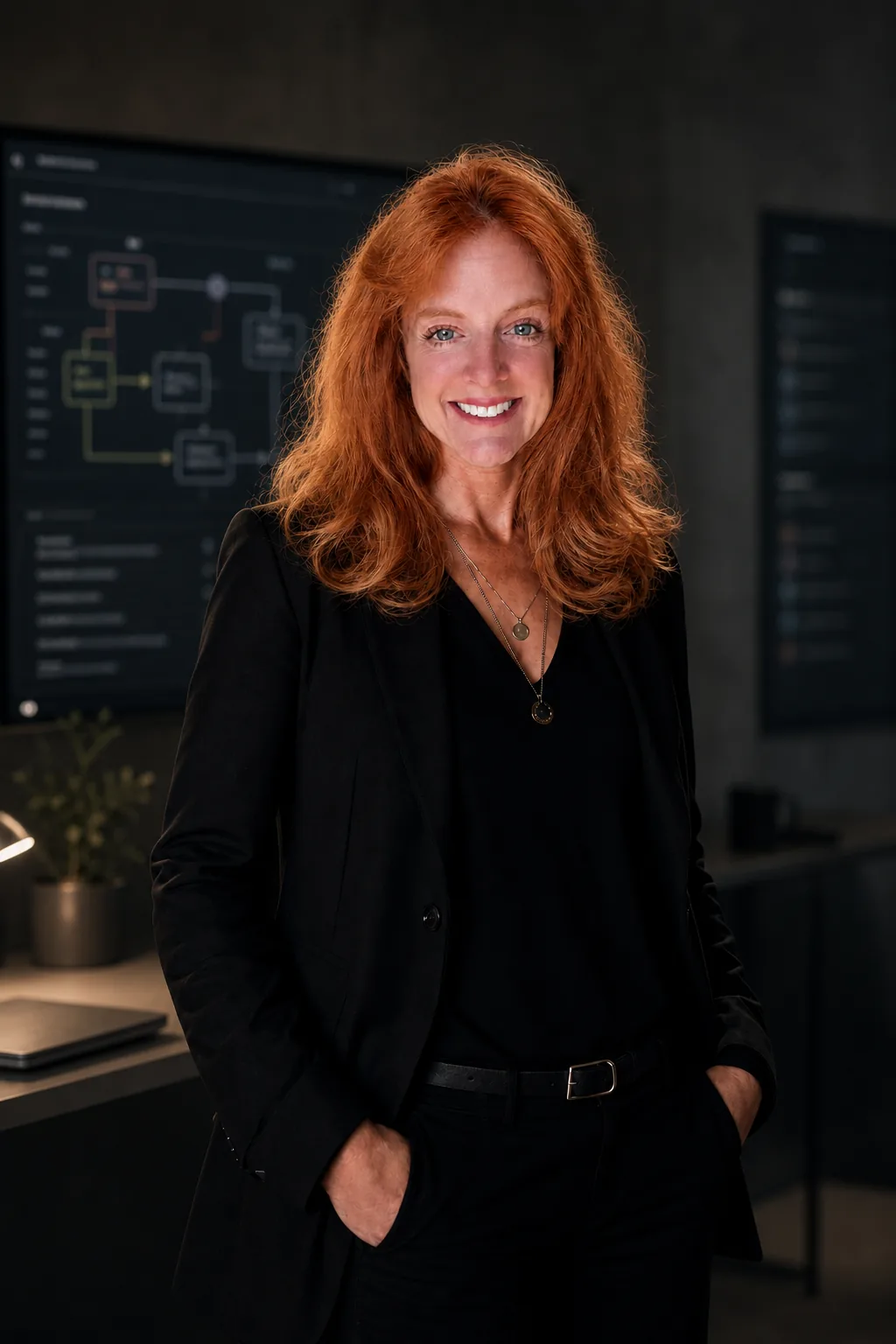
Small and medium business owners hire me to build agentic workflows that run without them. Automated intake, follow-up sequences, routing: the repetitive work that eats owner time and leaks revenue. I build the system. It runs. They get their time back.
Nobody was coming
to build it for me.
In 1998 I moved to Ethiopia and started an orphanage and an international adoption program. There was no budget, no team, no software, and nobody who had done it before that I could copy. Children needed placing, families needed matching, governments needed paperwork in a particular order, and every one of those things had to happen whether or not I felt ready.
So I built the process. Then I did it again in Kenya, and again in Haiti.
Here's the thing I didn't understand at the time. Those are the exact conditions that make most technology projects fail: no clean data, no dedicated staff, no reference implementation, and real consequences if it doesn't work. The failure rate isn't a mystery. MIT put a number on it recently, and 95% of enterprise AI pilots delivered nothing measurable.
I've spent thirty years building in those conditions anyway, and it taught me one thing that I now apply to every business I touch: the technology is almost never the hard part. The hard part is that nobody has written down how the work actually moves, so nothing can be handed off, and one person ends up holding all of it.
That's why I don't start with tools. I start by mapping what your business genuinely does, step by step, including the steps that only exist because you remember them. Then I automate the pieces that shouldn't need a person, and I put a person back in the places where the stakes are real.
It's also why I won't sell you a system you don't need. I've been on the side of this where a thing not working has a cost that matters, and it changes how carefully you build.
I've done this before. At Capgemini, one of the world's top management consulting firms, I advised large enterprises on their internet strategies at the exact moment the web was transforming business. My job was translating an emerging technology into operational reality for organizations that were uncertain, risk-averse, and skeptical. That's the same work I do with AI today.

The thread, in one line.
I find capability that's being underused and put it to work for people who need it. That's adoption.com in 1995, an orphanage and adoption program in Ethiopia, then Kenya and Haiti, a teacher-placement business across China, a BS in Medical Technology, and now agentic systems for small businesses.
I've never built anything I wasn't willing to be accountable for. That's what working in places with real human stakes does to a builder.
record.

“I have a master's in computer science, so I can usually tell when someone's overselling technology. Annette wasn't. She went through 288 of my Google reviews and told me things about my own graduates that 15 years of running these seminars hadn't shown me. Then she built the thing I'd been describing for years: someone takes the assessment, the system scores it and sends that person a personal response, and nobody touches it. I understood exactly what she built, which is why I know how good it is.”
Ready to stop doing the work
your system should be doing?
If you're spending hours on work that could automate itself, book a 15-minute call. I'll tell you straight whether AI can fix it. No pitch.
GET THE FREE CONSULT ->